
Learn · Understanding our inner world
The Cognitive Triangle for Kids: Understanding Thoughts, Feelings, and Actions
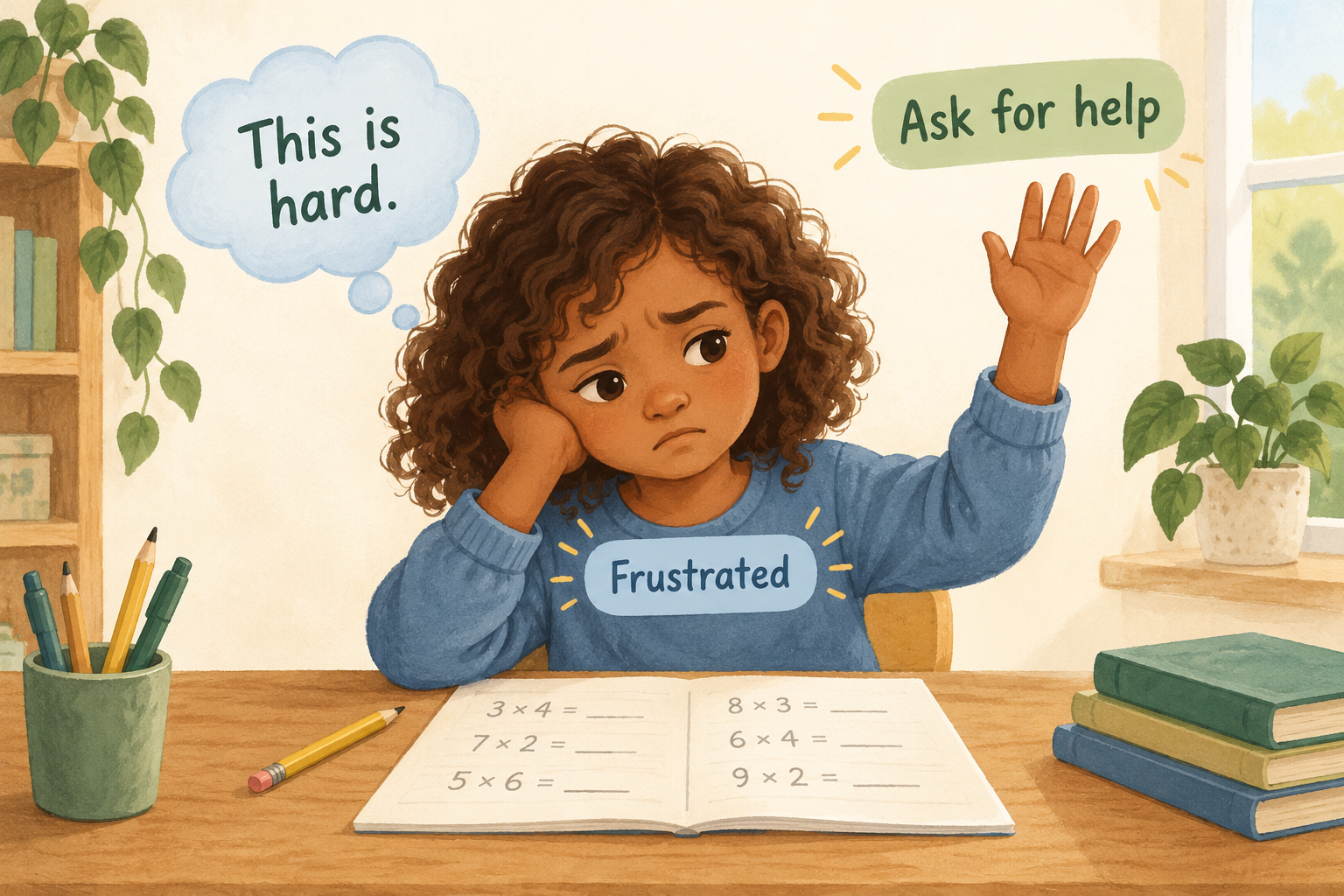
A child sees a difficult assignment and says, “I can’t do this.” Their shoulders tighten. They push the paper away.
We can see the action. We may recognize the frustration. But understanding the thought underneath can help us respond with more curiosity—and help the child understand what is happening inside.
The cognitive triangle is a simple way to explore how thoughts, feelings, and actions connect. Children can use it to notice a pattern, consider another perspective, and choose a next step with support.
What is the cognitive triangle?
Imagine a triangle with one word at each corner:
- Thoughts: What is going through my mind?
- Feelings: What emotions am I experiencing?
- Actions: What am I doing, or feeling an urge to do?
The arrows point both ways because each part can influence the others. This idea comes from cognitive behavioral therapy, or CBT, which explores relationships among thinking, emotions, and behavior. The triangle offers a simplified introduction children and adults can explore together. Learn more about CBT from Oxford Health NHS.
The triangle is only part of the picture. A child’s body, surroundings, relationships, and experiences matter too. Hunger, exhaustion, sensory overload, or an unsafe situation cannot be understood through thoughts alone.
One situation, more than one possible story
Imagine a child waves to a friend, but the friend walks past without responding.
The child might think: “They don’t want to be my friend anymore.” They may feel hurt or worried. They might walk away, avoid the friend, or say something angry.
Another possible thought is: “Maybe they didn’t see me. I can check.” The child may still feel uncertain, but they might try saying the friend’s name or asking about it later.
The situation has not changed. A different interpretation creates room for a different response. That does not mean the second explanation is automatically true. We are helping the child distinguish what they know from what they are guessing.
Thoughts and feelings are different
Children—and adults—sometimes use the word “feel” when describing a thought. “I feel like nobody likes me” expresses a belief or interpretation. The feeling underneath might be loneliness, sadness, worry, or embarrassment.
You can help separate them gently:
“Your mind is saying, ‘Nobody likes me.’ What feeling shows up when you have that thought?”
Thoughts can be words, pictures, memories, or predictions. Feelings are emotional experiences, such as excitement, disappointment, anger, and fear. Neither needs to be labeled “bad.” Both give us something to explore.
Try it together: draw your own triangle
Choose a small, everyday experience when your child is calm enough to reflect. A fictional character’s experience can work well if discussing their own feels uncomfortable.
Draw a triangle and label the corners Thoughts, Feelings, and Actions. Write the situation above it. Then explore these questions together:
1. Notice: what happened?
Describe the event as simply as possible: “I made a mistake on my math worksheet.”
Ask about body clues too: “Did your stomach feel tight? Did your face feel warm?”
2. Name: what showed up inside?
Thought: “I’m terrible at math.”
Feeling: Frustrated, embarrassed, or discouraged.
Offer suggestions if needed, but let the child correct you. Their experience may differ from your guess.
3. Cope: what did you do, and what could help?
Action: “I pushed the worksheet away.”
Explore a manageable next step: taking a brief break, asking for help, or trying one problem together. A child does not have to change their thinking before receiving comfort or practical support.
4. Grow: is there another believable thought?
Try: “This problem is hard. I can ask for help and work on one part.”
Ask what action might become possible with that thought. The aim is a fairer, more useful perspective—not a promise that everything will be easy.
Help children check a thought without arguing
When a child says, “Everyone thinks I’m weird,” immediately answering “No, they don’t!” may leave them feeling unheard.
Start by recognizing the emotion: “That sounds really lonely. Let’s look at what happened together.”
Then ask one gentle question:
- “What makes that thought seem true?”
- “Is there anything that points to another explanation?”
- “What would you say to a friend in this situation?”
- “What could we do to find out more?”
This approach resembles the “catch, check, change” framework described by the Beck Institute for work with children and adolescents.
Keep the conversation curious. It should feel like exploring together, not proving the child wrong.
Make room for real problems
Sometimes a child’s concern is accurate. A peer may have excluded them. An assignment may need accommodations. A situation may require an adult to intervene.
In those moments, use the triangle to understand their experience while addressing the problem: “That was hurtful. You deserve support. Let’s decide what we can do next.”
Likewise, when a child is overwhelmed, begin with connection, safety, and support. Reflection can wait until they have enough space to participate.
Start with one small moment
You do not need to complete a triangle after every difficult experience. Try one low-pressure example together and let the child draw, talk, or write.
Success might mean noticing a thought, naming a feeling, or asking for help. Those small discoveries are meaningful practice.
At SELestial Academy, we help children notice their inner experiences, name what is happening, cope with support, and grow through reflection.
Ready to begin with feelings? Download our free My Feelings Journal and use it as a starting point for your next conversation.